

The Meaning of Structure
by Katrien Van Huyck
Let’s play a little game here.
You will be asked 5 questions. There is no possible way you will be able to guess the answers. Unless, off course, you were present at the Panel on Structure during the immensely exciting, supportive and unique EWF.
Enjoy anyway. It is very insightful.
1. How can one succeed in making each single person in a space that seats 120 feel welcome and valued even before they have introduced themselves to their literary neighbour?
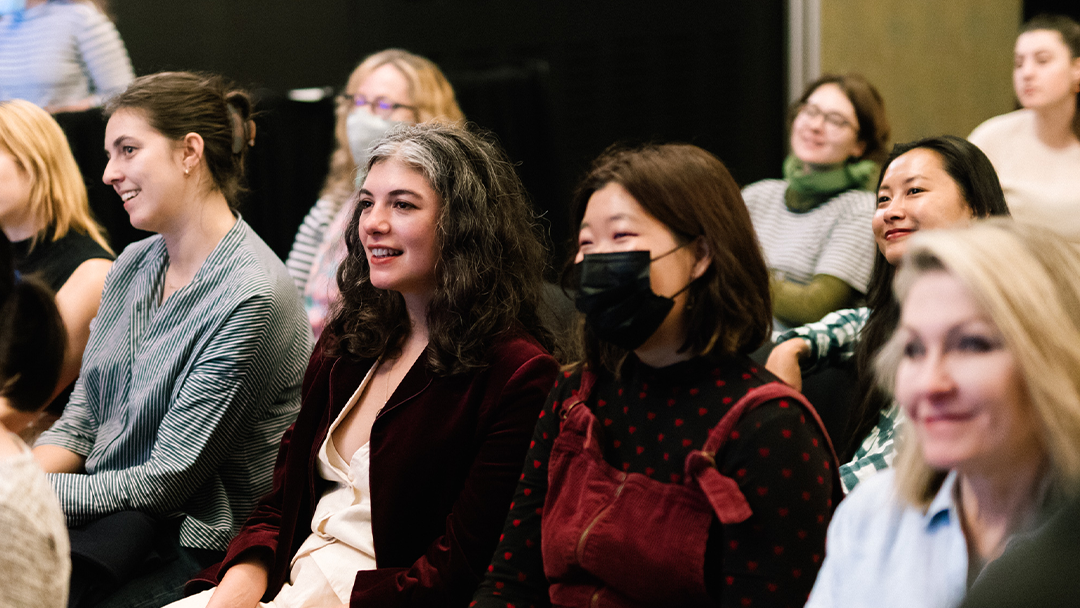
Benjamin Grant Mitchell did. By preparing and handing out 10 dozen neatly typed up cards revealing the email addresses of the panellists (‘Just in case you have any queries later on’) and by smoothly and sincerely knitting their speeches together, the host of the Panel on Structure stole the audience hearts. And so did the rest of the panel. They sprinkled us with their non-commercial charm and surprised us with their individual and at times radical views on a writer’s structure. And they were all fine with their voices being recorded. Talking about a warm welcoming.
Thank you Benjamin for reminding us of the role of a great host.
2. How to structure a talk on Structure?
Yes, even a festival for and by emerging crowds prizes punctuality and reliability and so each panellist’s speech was strictly timed. Damon Young, writer, philosopher and pioneering speaker (the toughest role) mounted the stage fully equipped to take us all on an in depth journey through the structural steps necessary to create a good old essay.
He touched on the prologue, introduction, argument, conclusion and epilogue admitting the second part is the most challenging because you need to bring the reader into your world. The introduction is all about creating links to emotions and characters and setting the reader up for questions asked later in the piece. ‘You have to get people onto the rug with you to start with’ he continued, ‘then, later on, you can throw them off with something scary or beautiful or wonderful’.
As soon as Damon had so passionately sketched this metaphor he realised he was starting to run out of time, so he decided to throw in a last bit of advice that would effectively assemble the 3 pages of unspoken speech lying in front of him. ‘There are no perfect rules of good authorship’ he concluded, ‘there are only guidelines’.
Structure is a funny thing.
Thanks Damon for sharing with us that very powerful lesson.
3. How to capture the fluidity of the world into form?
Anita Sethi, flown in from the UK and 1 of the 7 ambassadors of the festival, crafted her metaphor by connecting the need for structure in the life of a full-time writer with the writer’s urge to create a coherent story. ‘Where have I come from? Where am I? and Where am I going?’ Anita reminded us in her soft voice, ‘are the questions at the heart of the journey’.
The journey and the whole idea of voyage and return is just one of the formats Christopher Booker describes in his book The Seven Basic Plots, and it is Sethi’s favorite. ‘Place signposts into your work’ she adviced, ‘as you don’t want your reader to get hopelessly lost in a building that is still under construction’. Further into her speech Anita inspired us to play with the pyramid structure, to juggle form and content by asking ourselves what kind of journey it is that our character is making. ’And there is no point in going the journey on your own’ she smiled, ‘so use a very memorable opening sentence’.
There is no recipe for how to capture the world into form, it is a journey unique to each writer and which quote better captures this idea than this extract of the poem The Road Not Taken by Robert Frost: Two roads diverged in a wood, and I- I took the one less travelled by, and that has made all the difference.
Thank you Anita for seducing us with your playfulness.
4. How to look for holes in a structure?
It was wonderful to meet the writer behind comedienne Fiona Harris, to get a tatse of the methodical sweat shed backstage before the onstage laughter.
In Fiona’s approach everything evolves around the characters, their secret and how the audience can engage with them, care about them. Her writing process is clearly structured whereby Fiona, like a first class laboror, builds and balances words, brick by brick, to create a story with the solidity of a Romanesque palace -to use another metaphor.
Harris suggested a couple of things that might help the emerging writer to bring structure into their stories, and to detect and fill structural holes: write chronologically, introduce conflict immediately, add a few obstacles in the middle (suspense!) and offer a resolution at the end. She also emphasized that a good story needs about 5 to 6 big moments and off course, a good dose of humor.
Thank you Fiona for reminding us that being organised won’t do any harm.
5. How to speak your Truth?
Indiginous writer and storyteller Ali Cobby Eckermann got us all by surprise; not a single technical guideline was given, not one word of structural advice. Not in the sense that was expected anyway. The question that had brought us all together in the Yarra Room that morning was once more answered from an experiential point of view, just as the other panellists had done, but Ali’s speech was the rawest of all.
Coming from an oral written as opposed to a structural background it was the desert that was -and is- Eckermann’s campus so her way of approaching structure in her writing comes from the land. ‘Listen with all your senses, to the pulse of your land, where you are’ she sang to the audience whom had gone very quiet.
Ali keeps a tight knit bond with her family which to her is the underlying structure to her work. ‘My Structure is my truth’ Ali confessed, ‘I come from a family of storytellers and truth seekers’. To read her work out loud is an essential part of being a writer and storyteller, it helps her to feel how the words sit on the page. As she read her poem Tears for Mum it became clear that those words didn’t need any rearranging.
Thank you Ali for returning to the basics.